
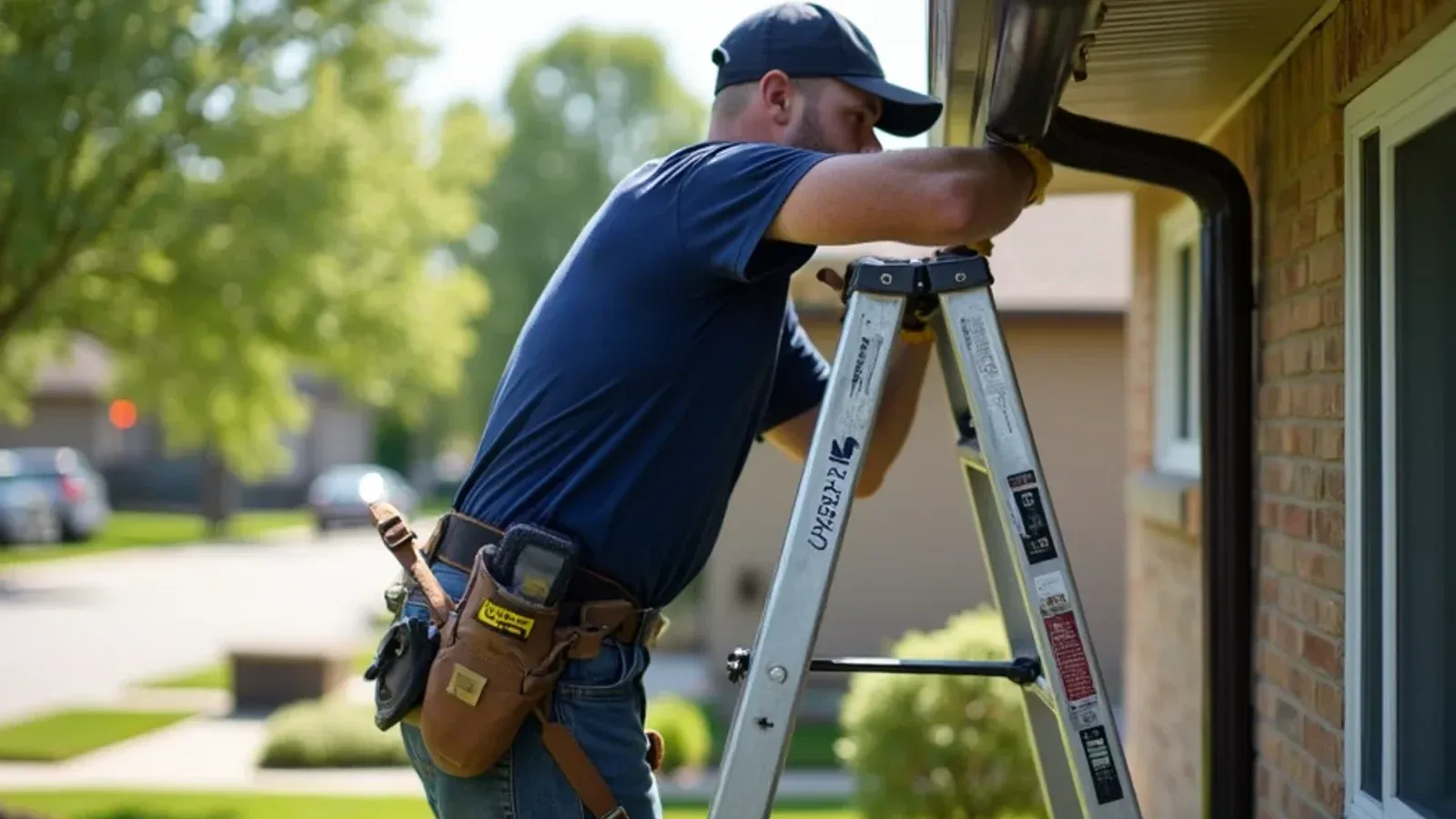
Quick Answer: Gutters leak at seams and corners primarily because of thermal expansion and contraction, degraded caulking, and fastener fatigue. In Central Iowa, annual temperature swings from -20°F to 95°F cause aluminum troughs to expand and contract nearly half an inch, shearing brittle silicone seals. Upgrading to continuous seamless gutters eliminates 95% of these joints, safeguarding fascia lumber and foundation perimeter soils.
Dripping gutter seams and leaking corner miters are among the most frequent service calls we receive at Palomeque Gutter LLC. Whether you own a home in Des Moines, a ranch in Urbandale, or a two-story residence in West Des Moines, watching rainwater pour through an exterior joint onto walkways or landscaping indicates that your roofline drainage has failed.
While a slow drip at a corner miter might seem minor during light drizzle, persistent seam leaks rot wood sub-fascia, stain siding, saturate foundation backfill, and lead to basement seepage. In this guide, founder Peter Palomeque explains the physical causes of seam failures, why standard hardware-store caulks break down quickly, and how professional repairs and continuous seamless systems solve the problem permanently.
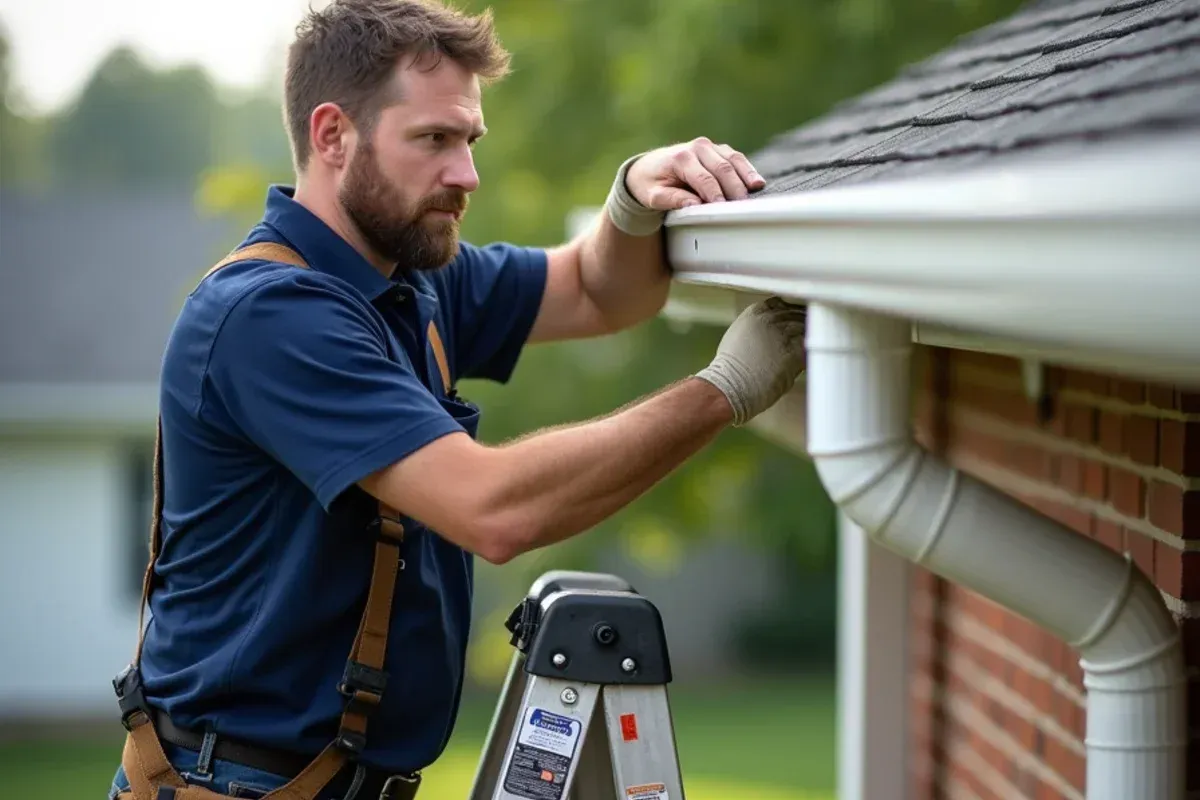
The Core Physics Behind Gutter Seam and Corner Leaks
Gutter troughs appear rigid once mounted, but they are subject to constant thermal movement and environmental stress across Central Iowa's seasons:
1. Thermal Expansion and Contraction Shear Aluminum expands and contracts noticeably with temperature changes. In Greater Des Moines, roofline metal experiences extreme temperature swings—from -20°F wind chills in January to 130°F radiant roof heat in July. On a 50-foot run, this 150-degree temperature swing causes the aluminum trough to expand and contract by approximately 7/16 of an inch.
On sectional gutter systems built from 10-foot retail segments, this movement creates continuous shear stress at every overlapping lap joint. As the metal cycles between contraction and expansion, caulking beads stretch, tear, and lose adhesion to the aluminum substrate.
2. Multi-Directional Stress at Corner Miters Corner miters endure far higher mechanical strain than straight gutter runs. At an inside or outside 90-degree corner, two independent gutter troughs meet perpendicular to each other. As both runs expand and contract along their respective axes, the corner joint experiences rotational torque. When heavy thunderstorm downpours direct large volumes of water down roof valleys into an inside corner, hydrostatic pressure forces water through any micro-fissure in the sealant.
3. Debris Damming and Chemical Degradation Sectional joints have an interior lip where the two metal sections overlap. Leaves, maple seeds, and roof shingle granules catch against this ridge, creating small dams. Standing water sits continuously over the seam. Most retail silicone caulks degrade when submerged in standing water containing organic tannins and asphalt roof oils, causing the seal to soften, crack, and fail within two to three years.
| Seam Failure Cause | Primary Environmental Trigger | Impact on Gutter Joint | Typical Lifespan |
|---|---|---|---|
| Thermal Shear Stress | 100°F+ seasonal temperature shifts | Stretches and shears adhesive bond | 2 to 4 years on sectional systems |
| Hydrostatic Valley Overload | Heavy thunderstorm downpours | Water pressure forces past cracked sealants | 1 to 2 seasons after seal cracks |
| Chemical Sealant Hydrolysis | Standing water behind leaf dams | Dissolves plasticizers, causing brittle cracking | 18 to 36 months with basic caulk |
| Fastener Back-Out & Sag | Heavy winter snow and ice dams | Rivets pull loose; seam separates mechanically | 3 to 5 winter freeze-thaw cycles |
| Fascia Rot & Cantilever Sag | Chronic water dripping behind gutter | Wood softens; hangers lose grip on framing | 2 to 4 years of neglected dripping |
Corner Miter Types: Box Miters vs. Strip Miters vs. Hand-Cut Tabs
The design of your gutter corners strongly influences how well they resist leaks over time:
Pre-Stamped Box Miters (High Failure Rate) Box miters are mass-produced corner cups sold at retail home centers. To install them, straight gutter runs slip into both sides of the box unit. - The Vulnerability: A single box miter introduces two separate seams just inches apart. Because fit tolerances are loose, installers rely on heavy caulking rather than a tight mechanical bond. - Expected Lifespan: 2 to 4 years before dripping starts.
Strip Miters (Moderate Durability) A strip miter joins two gutter runs cut at 45-degree angles, capped by a narrow aluminum strip over the seam. - The Mechanics: Strip miters reduce the seam count to a single diagonal joint. When riveted securely and sealed from the inside, they provide dependable service. - Expected Lifespan: 5 to 8 years in Central Iowa conditions.
Custom Hand-Cut Tab Miters (The Professional Standard) Custom hand-cut miters are fabricated on-site by experienced installers. One gutter section is precision-cut with overlapping tabs that fold tightly around the adjoining run’s profile. - The Mechanics: Overlapping tabs are fastened with structural aluminum blind rivets along the faces and bottom pan. Because the metal joint has mechanical rigidity before sealant is applied, it moves as a single unit during thermal cycling. - Expected Lifespan: 15 to 20+ years when paired with commercial tripolymer elastomeric sealants.
Tired of Dripping Gutter Seams and Corners?
Call Peter Palomeque directly at (321) 485-9911 for an honest inspection and professional corner repair or seamless upgrade.
Direct to Peter & crew · No automated call center
Why Standard Hardware-Store Silicone Fails on Gutters
Many homeowners attempt DIY repairs by applying 100% silicone caulk over leaking seams, only to find the leak returning within a few months. Here is why consumer silicone fails on exterior gutters:
- Poor Adhesion to Oxidized Aluminum: Exterior aluminum forms a microscopic oxide layer. Standard silicone caulk lacks the chemical etching agents needed to bond permanently to oxidized metal.
- Brittle at Sub-Zero Temperatures: Silicone loses elasticity in severe cold. When temperatures fall below zero in an Iowa winter, contracting metal easily shears the hardened caulk.
- Trapped Moisture Breakdown: Applying caulk over an incompletely dried gutter traps microscopic moisture beneath the bead. When winter arrives, that trapped water freezes and pops the caulk off the trough.
The Professional Alternative: Tripolymer Sealants Professional contractors rely on industrial-grade tripolymer sealants (such as Geocel 2320 or ProFlex). These advanced formulations retain up to 400% elongation elasticity in sub-zero cold, bond aggressively to aluminum, resist UV breakdown, and withstand continuous water submersion without degrading.
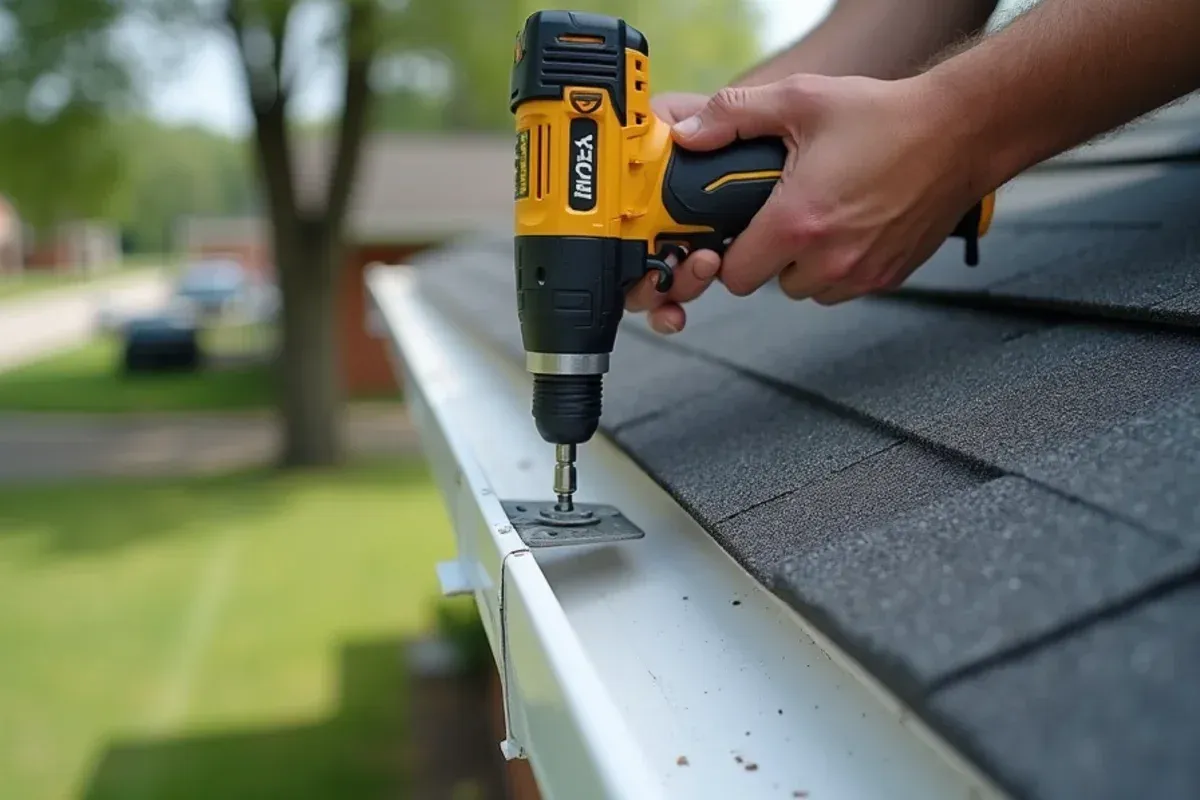
Professional Protocol for Resealing Leaking Gutter Seams
When performing localized leaking gutter repair, our team follows a rigorous five-step reconditioning process:
- Joint Stabilization: We drive heavy-duty screw-in hidden hangers within 12 inches of the joint to eliminate mechanical wobbling under wind and snow weight.
- Complete Sealant Removal: We mechanically strip away old, cracked silicone, butyl tape, and asphalt tar down to clean, bare aluminum using scraper knives and wire brushes.
- Chemical Degreasing: We wipe the joint thoroughly with denatured alcohol or acetone to remove dust, oil residues, and shingle grit.
- Structural Re-Riveting: Loose or missing fasteners are replaced with new high-strength 1/8-inch aluminum blind rivets to restore mechanical compression across the joint.
- Tooling Commercial Sealant: We inject commercial tripolymer sealant deep into the seam, tooling it smooth with a radius knife to eliminate air pockets and prevent leaf snags.
How Seamless Gutters Eliminate 95% of Leaks
While repairing leaking corner miters can extend their service life, sectional gutters with seams every 10 feet remain inherently vulnerable to repeated leaks. The ultimate solution for long-term reliability is custom seamless gutter installation.
``` Sectional Gutters (Hardware Store DIY): [ Endcap ]====(Seam 1)====(Seam 2)====(Seam 3)====(Seam 4)====[ Downspout ] * 4 intermediate seams on a 50-foot run, each prone to thermal shear and leaks.
Continuous Seamless Gutters (Palomeque Gutter LLC): [ Endcap ]====================================================[ Downspout ] * Extruded on-site in a continuous run. Zero straight seams. ```
By extruding heavy 0.032-gauge aluminum on-site to the exact measurements of your roofline, seamless gutters eliminate all straight joints. The only joints remaining are corner miters, endcaps, and downspout outlets—each assembled with structural rivets and industrial tripolymer sealant.
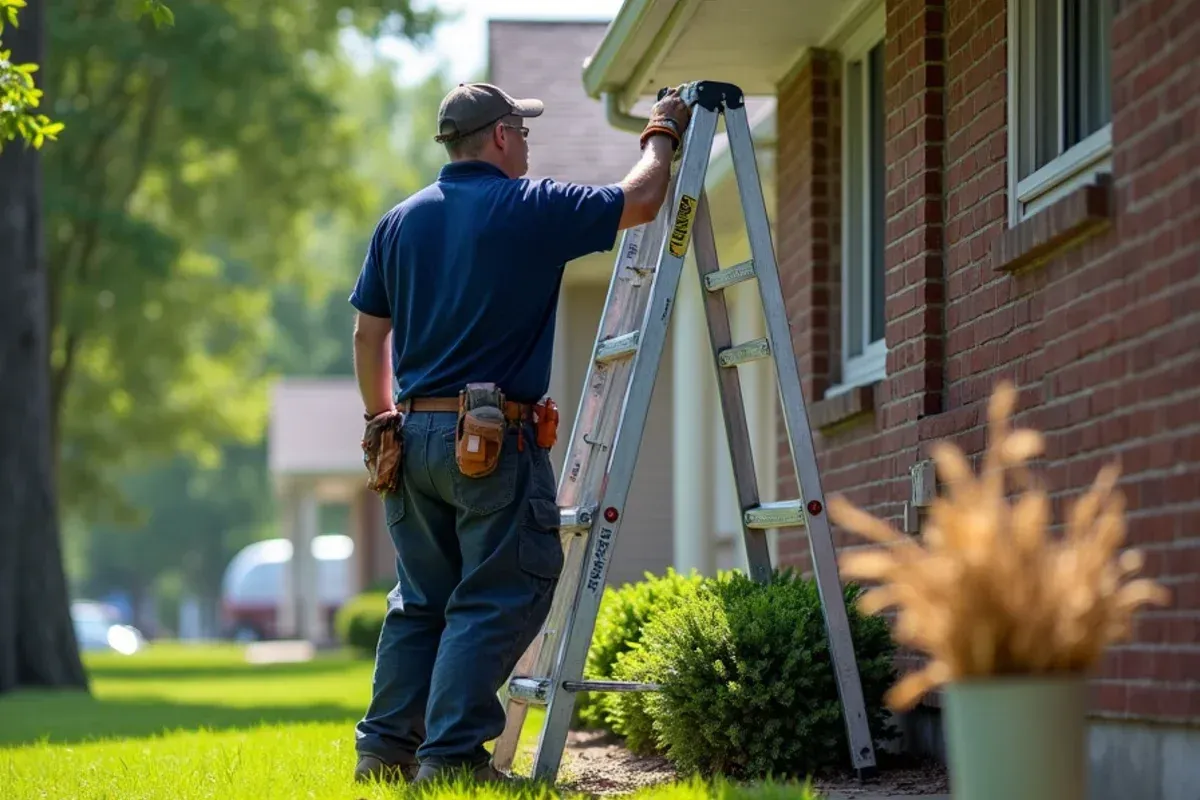
Diagnostic Guide: When to Reseal vs. When to Replace
Use this checklist to determine whether your leaking gutters are candidates for repair or full replacement:
| Assessment Factor | Repair and Reseal Recommended | Full Seamless Replacement Recommended |
|---|---|---|
| Trough Structural Condition | Metal is straight, dent-free, and securely attached | Troughs are warped, twisted, dented, or corroded |
| Number of Leaking Joints | 1 or 2 isolated corner miters or endcaps | Multiple straight seams leaking along roofline |
| System Age | Under 10 to 12 years old | 15 to 20+ years old |
| Fascia Board Integrity | Wood behind the gutter is solid and dry | Wood fascia is soft, rotted, or pulling loose |
| Water Capacity | 5-inch troughs handle rainfall without spilling | Troughs frequently overflow during cloudbursts |
| Fastening Hardware | Hidden screw hangers in place | Outdated spikes pulling out across the system |
If your system only needs corner attention, our sagging gutter repair and resealing services will restore leak-free performance. But if you have an aging sectional system with repeated joint failures, replacing it with 6-inch seamless aluminum provides lifetime protection and dramatically increases your home's exterior value.
2026 Greater Des Moines Pricing for Seam Repairs and Upgrades
Here are realistic pricing benchmarks for gutter repair and seamless replacement throughout Polk County and Central Iowa:
- Single Corner Miter Resealing & Re-Riveting: $150 to $275 (includes old sealant removal, chemical prep, new rivets, and tripolymer tooling).
- Multiple Corner Tune-Up (3 to 4 corners): $300 to $550 when serviced during a single visit.
- Sectional Seam Reinforcement & Pitch Adjustment: $175 to $350 per problematic 20-to-30-foot run.
- Sub-Fascia Board Replacement: $15 to $25 per linear foot (new primed lumber and custom aluminum trim wrap).
- Full 5-Inch Seamless Gutter Installation: $8 to $12 per linear foot installed.
- Full 6-Inch Oversized Seamless Installation: $12 to $16 per linear foot installed.
Why Central Iowa Homeowners Trust Palomeque Gutter LLC
When you contact Palomeque Gutter LLC, you work directly with founder Peter Palomeque, not a commissioned salesperson or third-party subcontractor.
- Trade Roots Since 2014: Over a decade of hands-on exterior sheet metal experience across Central Iowa.
- Owner-Operated Quality: Peter personally inspects and oversees every project, ensuring correct slope pitch and precise corner miters.
- State Registered Contractor: Fully licensed and insured under Iowa Code Chapter 91C (Registration #636243).
- Heavy-Gauge Materials: We install 0.032-gauge seamless aluminum with hidden screw hangers spaced every 24 inches for maximum snow-load resistance.
Stop letting leaking gutter seams rot your fascia boards and threaten your foundation. Call Peter Palomeque directly at (321) 485-9911 today for an honest assessment and free estimate.
What We See On Central Iowa Rooflines
In Central Iowa, gutters leaking at seams and corners are usually caused by thermal expansion cycles and degraded joint sealants. With temperatures swinging from -20°F winter nights to 95°F summer afternoons, aluminum expands and contracts constantly. We eliminate these failure points by rolling continuous seamless gutters on-site and hand-crafting precision corner miters sealed with commercial tripolymer compounds.
Frequently Asked Questions
Why do gutter corner miters leak more frequently than straight runs?
Corner miters bear the combined hydraulic force of two converging roof planes while undergoing perpendicular thermal expansion. As adjoining runs expand and contract at 90-degree angles, the corner seam experiences severe rotational shear stress. If pre-stamped box miters or low-grade silicone were used, the joint splits within two to three seasons.
Can I simply apply silicone caulk over a leaking gutter seam from the inside?
Applying fresh caulk over old, dirty sealant rarely lasts more than a few weeks. Water, trapped dirt, and aluminum oxidation prevent new silicone from bonding. Proper repair requires wire-brushing down to bare aluminum, cleaning with denatured alcohol, securing loose mechanical rivets, and applying an industrial tripolymer or polyurethane gutter sealant.
How do seamless gutters prevent gutter seam leaks?
Seamless gutters are custom-extruded on-site in a continuous trough stretching from corner to corner with zero intermediate joints. On a typical 50-foot roofline, sectional gutters require four leak-prone joints, whereas a seamless run has zero straight seams. The only joints remaining are corner miters and endcaps, fastened with structural rivets and commercial-grade sealants.
Need advice specific to your roof or drainage setup?
Peter Palomeque is happy to answer any questions about seamless gutter sizing, downspout routing, guards, or insurance estimates.
Call (321) 485-9911 for Fast Answers