
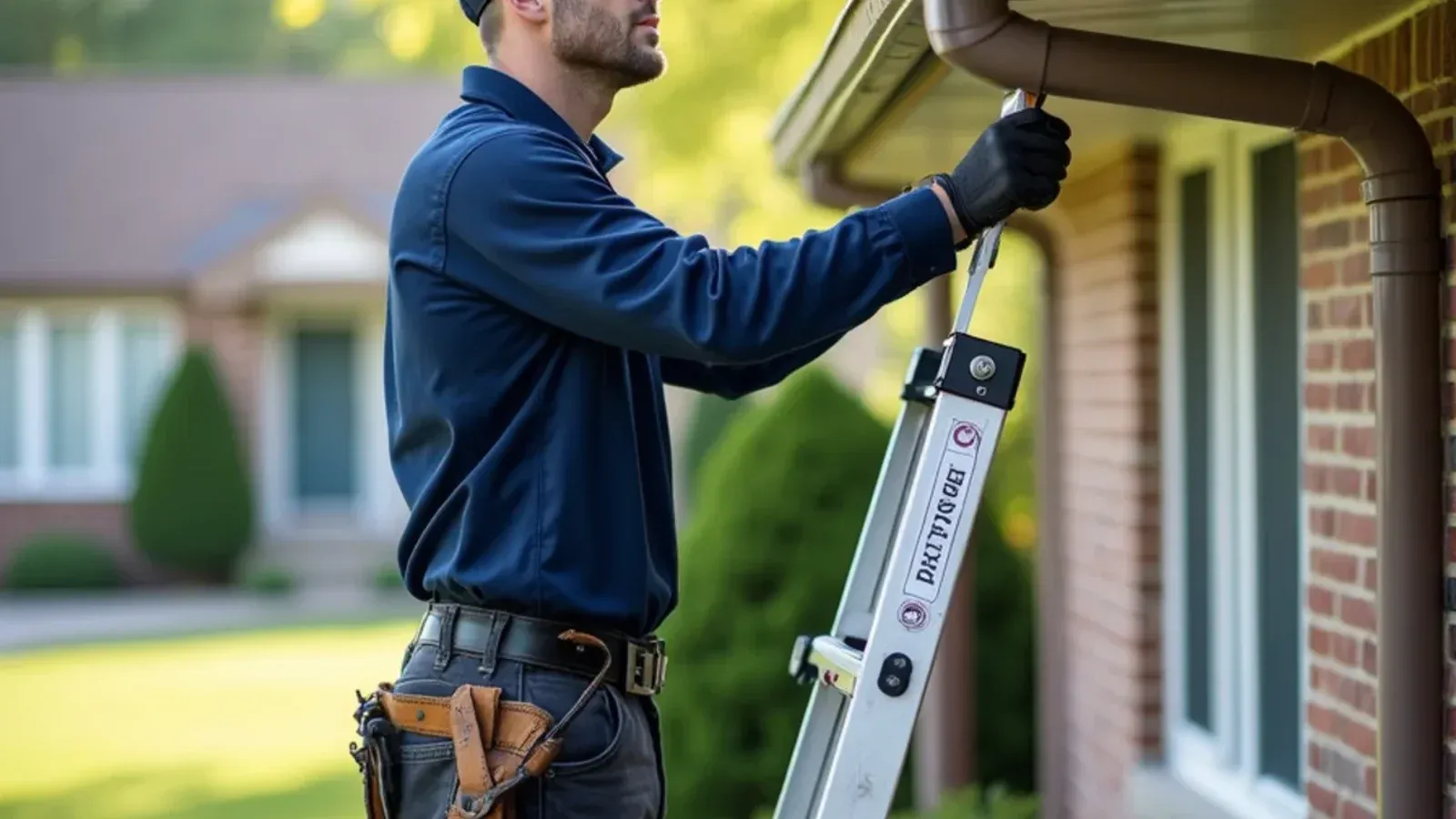
Quick Answer: You should always install your new roof first and your new gutters second. Installing the roof first prevents heavy tear-off debris and ladder impacts from denting brand-new aluminum troughs. Crucially, it allows gutter installers to slip the gutter's back lip neatly underneath the newly installed drip edge flashing, preventing water from dripping behind the fascia.
Every spring and summer across Central Iowa, severe hailstorms and high-wind derechos sweep through Polk County, West Des Moines, and Altoona, leaving thousands of homes with damaged shingles, bruised siding, and crushed gutters. Homeowners suddenly find themselves coordinating with insurance adjusters, roofing crews, and gutter specialists.
One of the most frequent questions we receive at Palomeque Gutter LLC is: "Should I get my gutters installed before my roofer comes, or should I wait until the new roof is on?"
The answer from an engineering and construction standpoint is definitive: always install the new roof first, and install new seamless gutters immediately afterward. In this practical guide, founder Peter Palomeque explains the mechanical reasons behind this sequencing, the critical role of drip edge flashing, and how to coordinate your trades to avoid paying for accidental damage twice.
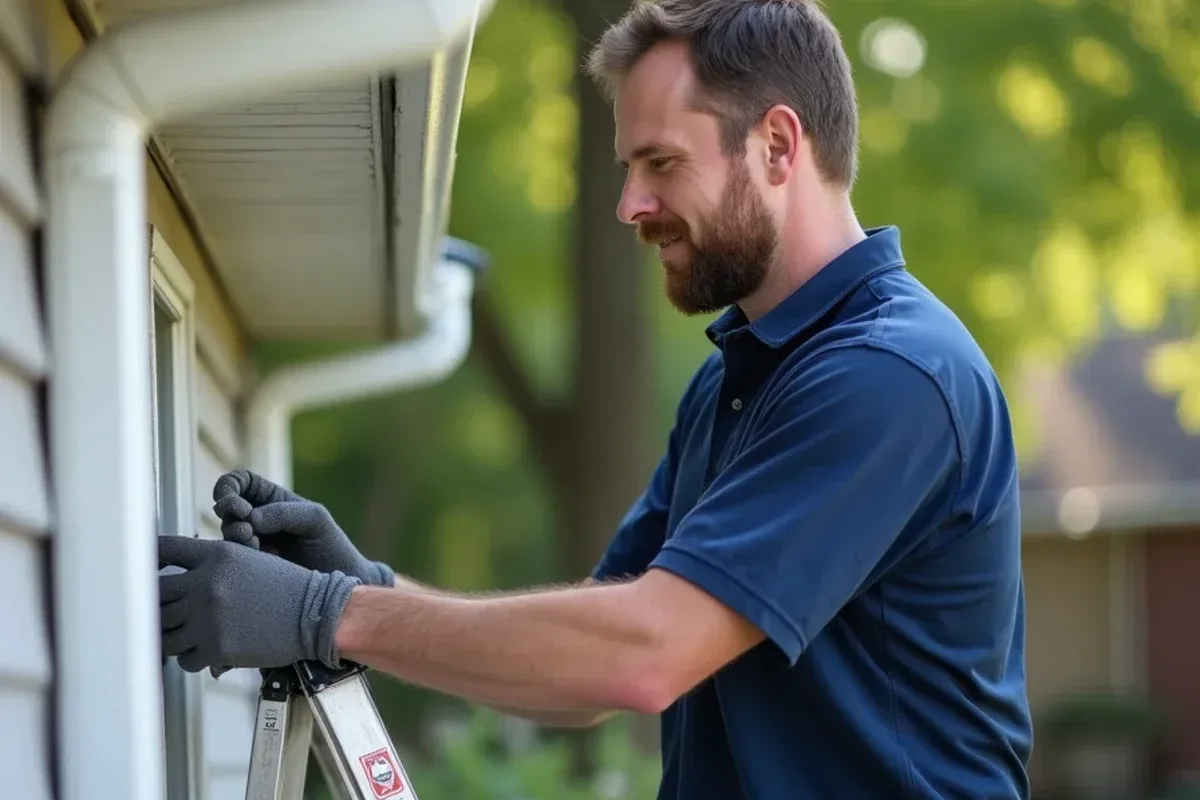
Four Critical Reasons to Install the Roof First
Understanding why the roof must precede the gutters comes down to how roofing crews work, how water flows off eaves, and how fascia lumber is inspected:
1. Protection Against Violent Tear-Off Debris Tearing off an old residential roof is heavy, chaotic work. A typical 2,500-square-foot roof carries between 5,000 and 8,000 pounds of old asphalt shingles, saturated underlayment, and thousands of roofing nails. Roofing crews use heavy steel tear-off shovels to pry shingles off plywood decking.
Bundles of heavy, grit-laden shingles slide down steep slopes toward the eaves before dropping into dumpsters or ground tarps. If brand-new aluminum gutters are already mounted along the eaves: - Sliding shingles and dropped tear-off shovels easily dent, scratch, or crease the top lip of the aluminum trough. - Heavy 28-foot fiberglass extension ladders leaned against the gutters crush the front bead, ruining the aesthetic appearance and warping the slope. - Wandering roofing nails and shingle grit fill the fresh gutters, scratching protective factory enamel and clogging outlets.
By waiting until the roofers have packed up their trucks and completed their magnetic ground sweeps, your new gutters remain pristine and flawless.
2. Flashing Geometry: The Drip Edge Overlap The single most important waterproofing detail on any residential eave is the physical relationship between the metal drip edge and the gutter trough:
``
Proper Eave Waterproofing Assembly:
=================================== [ Asphalt Shingle ]
   \-----------------------------   [ Shingle Overhang: 1/2" to 3/4" ]
    \___________________________    [ Ice & Water Shield / Underlayment ]
     \==============|               [ Metal Drip Edge Flashing (F-Style) ]
      \             |
       \            |
        | [Back Lip]|               [ Gutter Back Lip Tucked UNDER Drip Edge ]
        |   of      |=====|
        |  Gutter   |     |         [ Wood Sub-Fascia Board ]
        \___________/     |
         Gutter Trough    |
``
The metal drip edge is nailed directly to the roof decking along the eaves before underlayment and shingles are applied. The lower leg of the drip edge extends downward, kicking outward slightly. - When new gutters are hung after the roof is complete, the gutter specialist slides the high back vertical flange of the trough underneath the lower leg of the drip edge. - When rainwater cascades down the shingles and rolls over the drip edge, gravity directs 100% of the water into the gutter trough. - If gutters are installed before the roof, roofing crews often fail to tuck the drip edge properly into the existing trough, leaving gaps or forcing the drip edge behind the gutter back lip. Water then rolls down behind the gutter, rotting the fascia board and soaking exterior siding.
3. Precision Shingle Overhang Measurement Shingles must overhang the metal drip edge by an exact margin—typically 1/2 inch to 3/4 inch (or 3/8 inch depending on manufacturer specifications such as Owens Corning or GAF). - If shingles overhang too far (over 1 inch), high-velocity rainwater shoots straight past the gutter trough during heavy rain, dumping water directly beside the foundation. - If shingles stop flush with the drip edge or overhang less than 1/4 inch, surface tension causes water to curl backward around the drip edge, weeping behind the gutter trough.
When gutters are installed after the roof, our gutter technicians can visually inspect the actual shingle overhang along every foot of the eave, adjusting the gutter's forward projection and pitch so that water hits the exact center of the trough.
4. Decking and Fascia Lumber Inspection Severe Midwestern weather often rots the bottom edge of plywood roof decking and the wood sub-fascia board beneath old shingles. During a roof tear-off, roofers expose the roof deck down to bare wood. If rotted plywood or soft rafter tails are discovered, they can be cut out and repaired while the roof is open.
Attempting to mount new gutters to a house before the roof is stripped risks anchoring expensive hidden screw hangers into decaying wood that should have been replaced during the reroofing project.
Getting a New Roof in Des Moines?
Call Peter Palomeque directly at (321) 485-9911 to schedule your seamless gutter installation immediately following roof completion.
Direct to Peter & crew · No automated call center
Sequence Comparison: Proper Order vs. Improper Order
| Construction Aspect | Roof Installed FIRST, Gutters SECOND (Correct) | Gutters Installed FIRST, Roof SECOND (Flawed) |
|---|---|---|
| Gutter Trough Condition | 100% pristine, dent-free, and factory-finished | High risk of dents, scratches, and ladder creases |
| Drip Edge Flashing Fit | Gutter back flange slips cleanly under drip edge | Drip edge often bent, smashed, or tucked incorrectly |
| Shingle Overhang Alignment | Gutters positioned precisely under finished overhang | Fixed gutters may misalign with roofer's shingle line |
| Wood Rot Remediation | Eave decking and fascia inspected and repaired first | Fasteners driven into potentially compromised wood |
| Crew Accountability | Clear trade separation; no finger-pointing on damage | Roofers blame gutter crew; gutter crew blames roofers |
| Overall Warranty Protection | Full manufacturer and workmanship warranties intact | Compromised seals and bent metal risk voiding warranty |
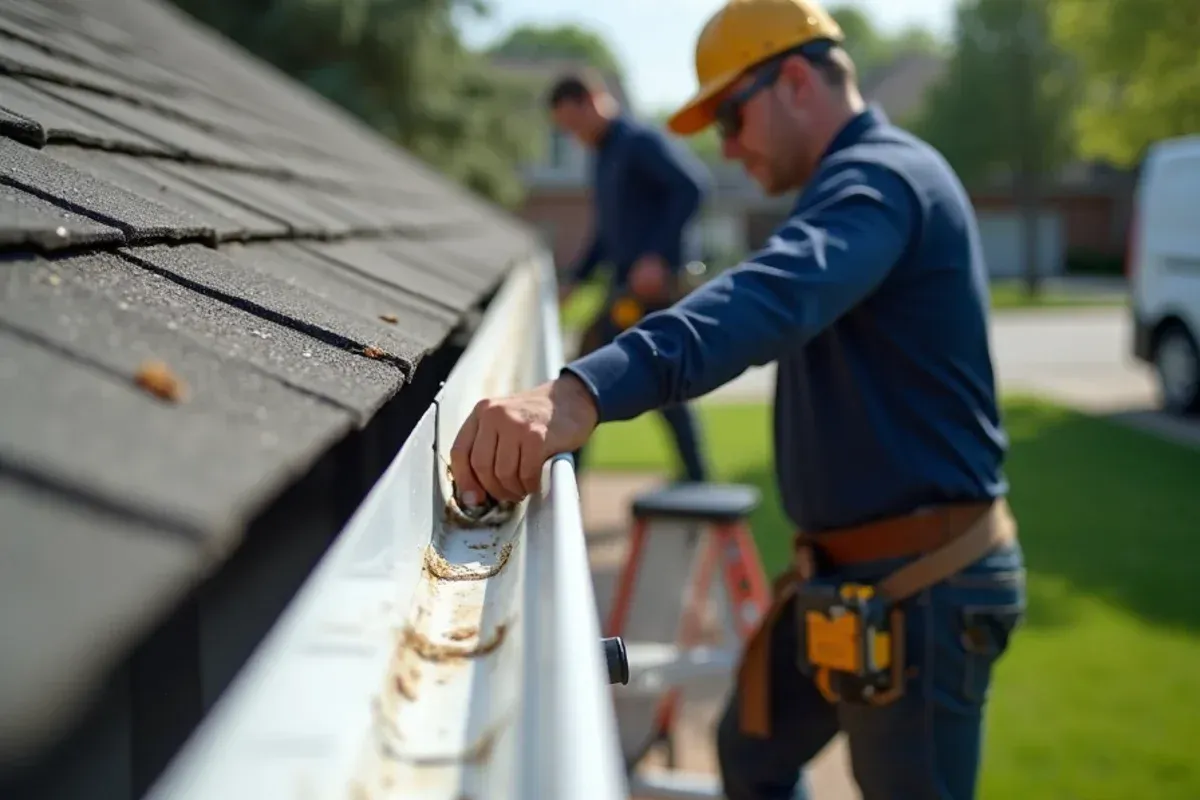
The Ideal 5-Phase Project Protocol for Homeowners
When replacing both your roof and your gutters—whether due to age or an insurance claim—follow this step-by-step project sequence:
Phase 1: Pre-Roofing Inspection and Old Gutter Removal Before roofing materials are delivered, determine what is happening with the existing gutters. If the old gutters are being replaced, have them taken down before the roofers start. Removing old gutters gives roofers unobstructed access to eave edges, simplifies the installation of Ice & Water barrier along the fascia line, and ensures no old spikes interfere with tear-off work.
Phase 2: Roofing Tear-Off and Structural Deck Repairs The roofing crew strips old shingles down to the plywood decking, inspects the eaves, replaces rotted sheathing, and inspects rafter tails for rot or carpenter ant damage.
Phase 3: Ice Barrier, Underlayment, and Drip Edge Installation Roofers install self-adhering Ice & Water shield along the first 3 to 6 feet of the eave (vital for Central Iowa ice dam protection). They then nail heavy-gauge metal drip edge flashing along the entire perimeter, lay down synthetic underlayment, and nail shingles with consistent 1/2-to-3/4-inch overhangs.
Phase 4: Job-Site Cleanup and Magnetic Sweep The roofing crew cleans the yard, sweeps driveways with heavy industrial magnets to collect stray roofing nails, and removes dumpster containers.
Phase 5: On-Site Seamless Gutter Fabrication and Installation Our team at Palomeque Gutter LLC arrives with our mobile roll-forming trailer. We measure each eave run, inspect the new drip edge, and extrude continuous seamless 6-inch aluminum gutters. We slip the high back lip under the drip edge, level the run with a 1/4-inch slope per 10 feet toward downspouts, and secure hidden screw hangers into rafter framing.
What to Ask Your Roofing Contractor Before Work Begins
To ensure a seamless transition between your roofer and your gutter installer, ask your roofing contractor these four qualifying questions:
- "What style of drip edge are you installing at the eaves?"
- "What will your shingle overhang be along the gutter line?"
- "Are you removing the old gutters, or should my gutter contractor handle detachment?"
- "If existing gutters are being saved, will your crew use ladder standoffs?"
Coordinating Insurance Claims for Roof and Gutter Storm Damage
Following severe convective storms in Greater Des Moines, insurance adjusters frequently bundle roof and gutter damage into a single summary estimate. Navigating this claim properly ensures you get full value:
- Separate Trade Estimates: Most general roofing companies subcontract gutter installation to third-party crews, often charging a 15% to 20% general contractor markup while installing thin, builder-grade 0.027 aluminum. You have the legal right under Iowa law to hire a dedicated gutter specialist of your choice for the gutter portion of the claim.
- Detach and Reset vs. Full Replacement: If your insurance adjuster only wrote for "detach and reset" on gutters damaged by hail or wind, request a reinspection. Aluminum gutters cannot be detached and re-hung without bending the metal and compromising factory seals. Hail-dented or detached gutters must be written for full seamless replacement.
- Upgrade to 6-Inch Seamless Aluminum: An insurance payout gives you the ideal opportunity to pay a small out-of-pocket difference to upgrade from builder-grade 5-inch sectional gutters to heavy 0.032-gauge 6-inch seamless gutters with oversized 3x4 downspouts.
Why Choose Palomeque Gutter LLC for Post-Roofing Gutter Installation
When your new roof is completed, trusting your exterior water management to Palomeque Gutter LLC guarantees flawless workmanship and long-term security:
- Trade Roots Since 2014: Over a decade of specialized hands-on exterior sheet metal craftsmanship across Central Iowa.
- Owner-Operated Quality: Peter Palomeque personally oversees job sites, ensuring that every gutter run is tucked properly under your new drip edge without scratching fresh shingles.
- Commercial-Grade Materials: We exclusively extrude heavy 0.032-gauge seamless aluminum coil, secured with zinc-coated hidden screw hangers every 24 inches.
- Licensed and Insured: Registered with the Iowa Division of Labor under Iowa Code Chapter 91C (Registration #636243).
Protect your new roofing investment with a custom-engineered seamless drainage system. Call Peter Palomeque directly today at (321) 485-9911 to schedule your post-roofing gutter installation.
What We See On Central Iowa Rooflines
In Central Iowa, new gutters should always be installed after a new roof is completed. Installing the roof first protects newly rolled gutters from heavy tear-off debris, guarantees proper drip edge flashing overlap, and ensures shingles overhang the gutter trough by the ideal 1/2 to 3/4 inch.
Frequently Asked Questions
Why should a new roof always be installed before new gutters?
Installing the roof first prevents heavy falling shingles, tear-off tools, and ladders from denting or crushing brand-new aluminum gutters. It also allows the gutter specialist to slide the high back lip of the gutter trough neatly underneath the newly installed metal drip edge flashing, ensuring rainwater cannot drip behind the gutter.
What happens if a roofer installs drip edge over existing gutters?
If existing gutters are already in place, roofers often have difficulty sliding the drip edge behind the trough without bending the metal or lifting shingle edges. In some cases, inexperienced roofers tuck the drip edge behind the gutter instead of over it, causing roof runoff to bypass the trough entirely and rot the wood fascia board.
How should I coordinate roof and gutter replacement on an insurance claim?
Notify your adjuster that roofing and gutters are separate scopes of work. Request that the gutter replacement be scheduled for 1 to 2 weeks after the roofing crew finishes. Have the old gutters removed either right before roofing begins or during tear-off, allowing roofers full access to inspect and repair rotted eave decking before new seamless gutters are hung.
Need advice specific to your roof or drainage setup?
Peter Palomeque is happy to answer any questions about seamless gutter sizing, downspout routing, guards, or insurance estimates.
Call (321) 485-9911 for Fast Answers