
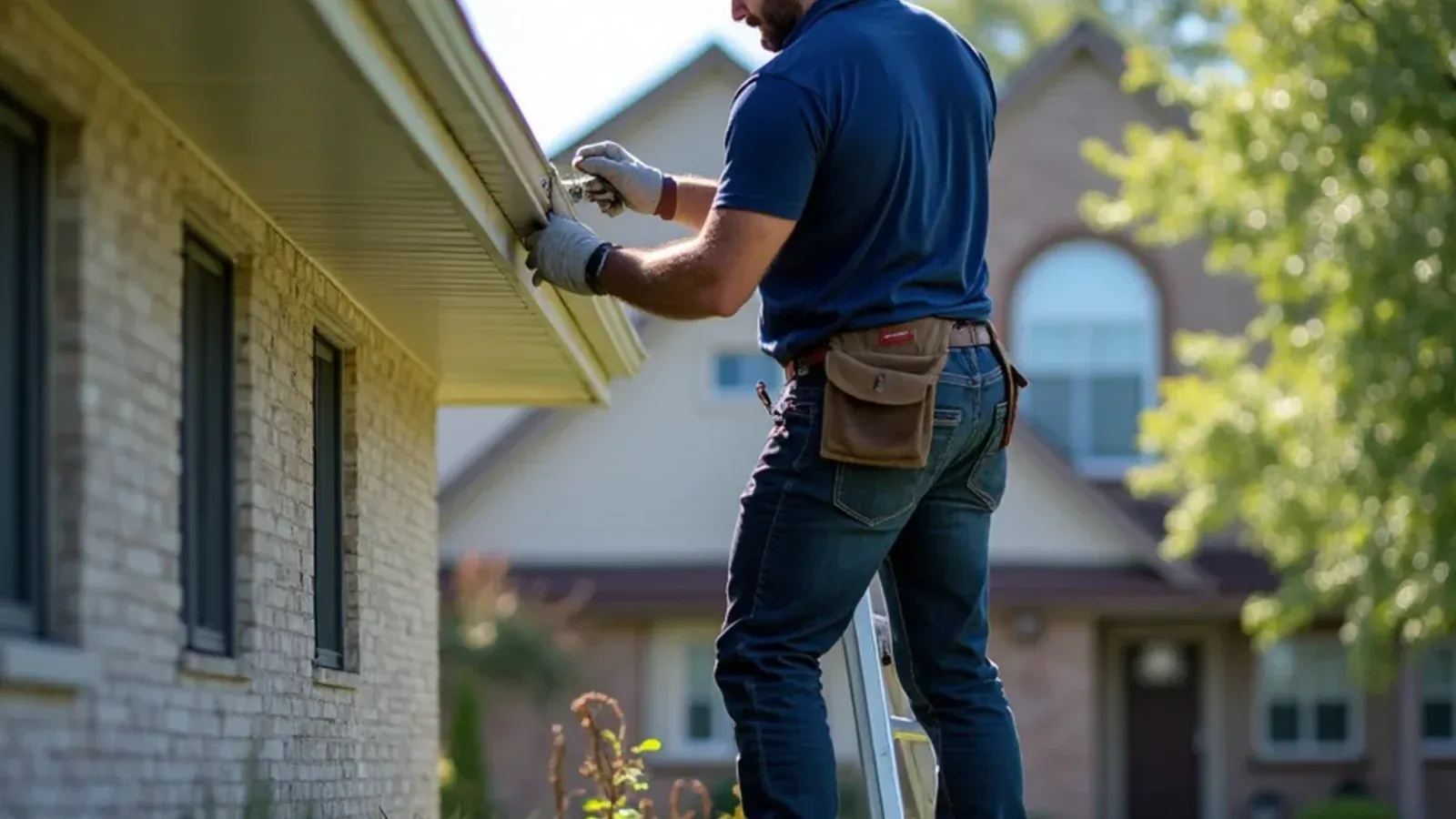
Quick Answer: You do not need gutters on every exterior wall, but you do need gutters along every sloped roof eave that drains water toward your home's foundation. While triangular gable ends shed no water and require no gutters, hip roofs require gutters on all four sides, and gable roofs require gutters along both draining eave edges.
When driving through residential subdivisions in Norwalk, Pleasant Hill, and Ankeny, you will notice a striking contrast in exterior drainage. Some homes feature continuous seamless gutters wrapping the entire roofline, while neighboring houses have gutters mounted only across the front porch and garage facade, leaving rear rooflines completely bare.
This discrepancy leaves many Central Iowa homeowners wondering: Do I actually need gutters on every side of my house, or are gutters only necessary over doorways and driveways?
The short answer depends on your home’s roof geometry and soil conditions. While you never need gutters along non-draining gable ends, omitting gutters from any sloped eave that sheds water onto foundation backfill is an expensive gamble in Central Iowa. In this architectural guide, founder Peter Palomeque explains how roof design determines gutter placement, why builder-grade "front-only" gutters put basements at risk, and where water diversion is non-negotiable.
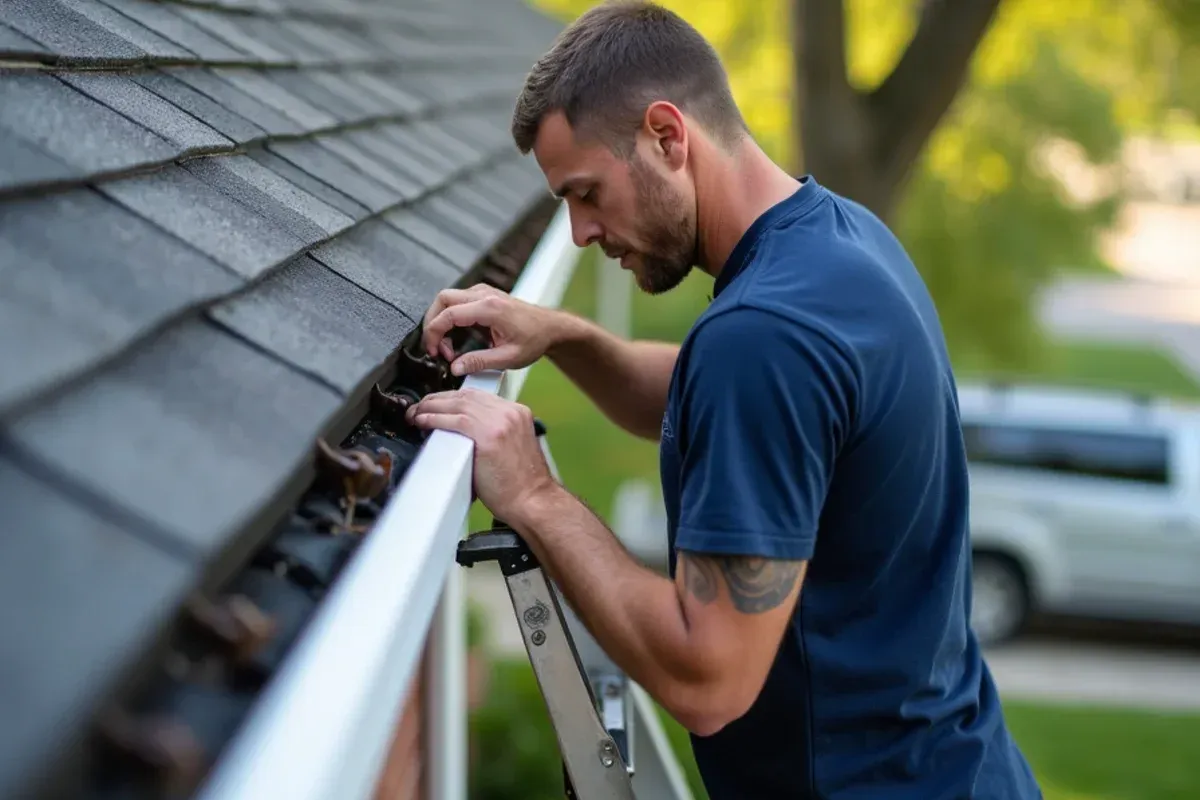
Architectural Rule: Eaves vs. Gable Ends
To determine where gutters belong on your home, you must first distinguish between the two primary edges of a pitched roof: eaves and gable ends (rakes).
``
Pitched Gable Roof Architecture:
          Ridge Line
            /\
           /  \ <--- Shingles slope DOWN toward Eaves
          /    \
Gable End|      | Gable End
(No Gutter      (No Gutter Needed)
 Needed) |      |
========+        +========
   EAVE 1          EAVE 2
[Gutter Needed]  [Gutter Needed]
``
1. The Eaves (Gutters Required) An eave is the horizontal lower edge of a sloped roof plane. Rain falling on shingles is pulled downward by gravity toward the eave. If an eave is 40 feet long and drains a 20-foot roof slope, it collects 100% of the rainfall from that 800-square-foot surface. Every functional eave requires a gutter trough to collect this concentrated sheet of water and route it away from the building.
2. Gable Ends or Rakes (No Gutters Needed) A gable end is the vertical, triangular wall created where two sloping roof pitches meet at the ridge. The edge running from the eave up to the peak is called the rake. - Rain falling near a gable edge flows down the pitch toward the horizontal eave below, not off the side rake. - Except for wind-blown surface dampness, virtually zero roof runoff discharges over a gable rake. - Installing gutters along a sloped gable rake is mechanically ineffective, structurally awkward, and visually unappealing.
Roof Styles and Perimeter Gutter Requirements
Your home’s roof profile dictates how many linear sides require gutters:
| Roof Profile | Number of Sloping Planes | Where Rain Discharges | Gutter Placement Rule |
|---|---|---|---|
| Hip Roof | 4 sloping planes | Over all 4 exterior walls | Mandatory on all 4 sides |
| Standard Gable Roof | 2 sloping planes | Over 2 opposing horizontal eaves | Mandatory on 2 eave sides; 0 on gable ends |
| Cross-Gable / Complex Roof | Multiple intersecting planes | Over multiple eave runs and roof valleys | Mandatory on all horizontal eave sections |
| Shed / Mono-Pitch Roof | 1 single sloping plane | Over 1 single low horizontal eave | Mandatory on the 1 low eave side only |
| Mansard / Gambrel Roof | Steep lower slopes on 2 or 4 sides | Over horizontal lower perimeter eaves | Mandatory on all lower draining eaves |
If you own a classic hip-roof home in Des Moines, rain discharges equally off all four sides. Leaving even one side un-guttered concentrates hundreds of gallons of water directly along that wall.
The "Front-Only" Builder Shortcut and the Iowa Soil Hazard
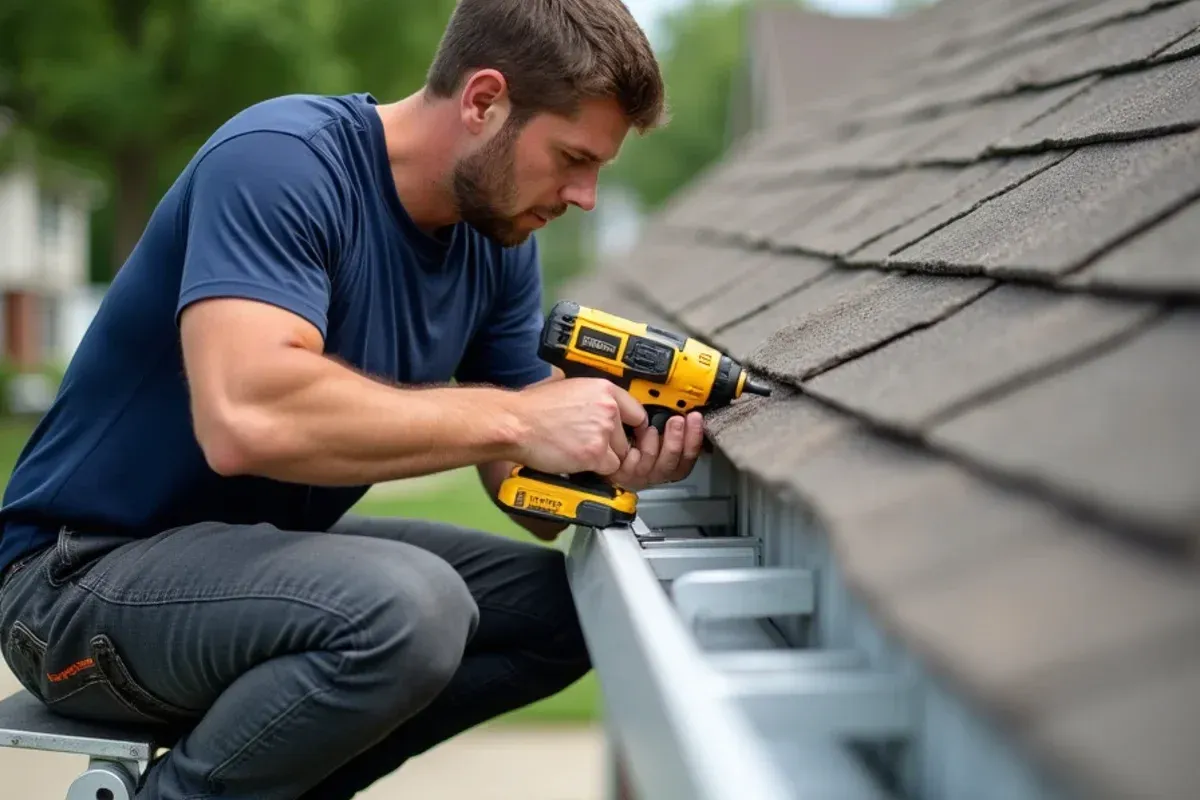
A common practice among tract homebuilders in suburban developments is installing gutters exclusively across the front elevation while leaving side and rear roof eaves bare. Builders do this for two reasons: 1. Curb Appeal and Sales Showmanship: Front gutters make the house look finished from the street and prevent rainwater from dripping on prospective buyers walking through the front door. 2. Cost-Cutting: Eliminating gutters along the back and sides saves the builder $600 to $1,200 per home across hundreds of tract lots.
The Catastrophic Result: Differential Soil Settlement While skipping rear gutters might save money during initial construction, it creates severe structural risks in Central Iowa due to our native soil composition: - Expansive Smectite Clay: Polk, Dallas, and Warren Counties sit atop heavy clay soils with high shrink-swell capacity. When clay absorbs water, it swells dramatically and exerts massive lateral hydrostatic pressure. When clay dries out during August droughts, it shrinks and pulls away from foundations. - Differential Hydrostatic Loading: If the front of your home has gutters routing storm runoff 10 feet away, but the rear eave dumps 3,000 gallons of roof water directly into the backfilled foundation trench during a 2-inch cloudburst, the soil expands unevenly. - Foundation Cracking and Wall Inward Bowing: The heavily saturated clay at the back of the home pushes inward against 8-foot poured concrete or concrete block basement walls. Over 5 to 10 years, this uneven force causes horizontal mortar cracks, sheared block joints, bowed walls, and chronic basement seepage at the floor-wall cove joint.
Installing continuous 6-inch seamless gutters along rear and side eaves balances moisture levels around the entire foundation perimeter, protecting the structural integrity of your basement.
Need Gutters Added to Bare Roof Eaves?
Call Peter Palomeque directly at (321) 485-9911 for an on-site inspection and custom seamless gutter layout.
Direct to Peter & crew · No automated call center
Five Exterior Zones That Must Always Have Gutters
Regardless of roof style, certain exterior architectural features and high-risk zones demand guttering:
1. Basement Foundations and Walkout Basements Any roof plane situated above a basement foundation—especially walkout basement patio doors—must be guttered. Un-diverted roof waterfalls dig deep trenches along foundation walls, wash away graded topsoil, saturate window wells, and flood finished lower levels.
2. Entry Porticos, Decks, and Walkways Without gutters above doors and outdoor living spaces: - Water sheets down on family members and guests entering or exiting the home. - Cascading rainwater rots exterior wooden door jambs, entry sills, and deck ledger boards. - In Central Iowa winters, dripping meltwater refreezes on concrete walkways, creating hazardous black ice directly outside entry doors.
3. Exterior HVAC Compressors and Heat Pumps Air conditioning condensers and heat pump units are routinely placed along side or rear exterior walls. When an un-guttered roof eave discharges water from a two-story roof directly onto an HVAC unit: - High-velocity water flattens delicate aluminum condenser fins, reducing cooling efficiency. - In winter, heavy ice sheets and falling snow berms crush fan grilles and bend compressor fan motor shafts, resulting in costly repair bills.
4. Egress Basement Window Wells Iowa residential building codes require egress window wells for basement bedrooms. An un-guttered roof eave dripping into a window well quickly overwhelms the gravel drain, filling the corrugated well with water until hydrostatic pressure breaks through the glass window seal, flooding the basement.
5. Landscaped Flower Beds and Paver Patios Concentrated runoff falling from a 15-to-20-foot roof eave acts like a hydraulic excavator. It tears apart landscape mulch, uproots expensive shrubs, and washes bedding sand out from beneath paver patios and retaining walls, causing hardscapes to settle and collapse.
``` Exterior Protection Priority Framework: [ HIGH RISK / MANDATORY ] All eaves over basement foundations Above front, rear, and garage entry doors Above exterior HVAC condenser units Above egress window wells and patio walkouts
[ OPTIONAL / SITE DEPENDENT ] Detached garden sheds on gravel pads with no basement Deep 4-foot architectural overhangs on sloped acreage * Outbuildings with dedicated rock drainage swales ```
The Financial Math: Gutter Cost vs. Foundation Repair
Homeowners sometimes hesitate to add gutters to un-guttered rooflines, wondering if the investment is truly justified. Comparing the cost of seamless gutter installation against foundation and water damage repairs reveals the immense return on investment:
| Exterior Component | Typical Cost to Install / Maintain | Failure Consequence if Omitted | Cost to Repair Failure |
|---|---|---|---|
| 40-Foot Rear Seamless 6" Gutter | $350 – $550 fully installed | Concentrated clay saturation along back wall | Foundation bowing & inward shear |
| Foundation Wall Bowing Repair | None | Requires steel I-beams or carbon fiber straps | $5,000 – $15,000 |
| Basement Window Well Gutter Drop | $150 – $225 | Flooded basement bedroom carpet and drywall | $3,500 – $8,000 |
| AC Condenser Protection Run | $175 – $300 | Smashed condenser fan blades & crushed coils | $1,200 – $3,500 |
| Landscape Bed Gutter Run | $250 – $400 | Mulch erosion, foundation trenching, paver collapse | $1,000 – $3,000 |
Investing a few hundred dollars to install seamless aluminum gutters along bare eaves provides permanent insurance against catastrophic structural repairs.
2026 Greater Des Moines Pricing for Adding Gutters
If your home currently lacks gutters on the rear or side eaves, Palomeque Gutter LLC can seamlessly integrate new troughs:
- Adding a Single 30-to-40-Foot Eave Run: $300 to $550 (includes custom seamless 6-inch 0.032 aluminum coil, hidden screw hangers spaced every 24 inches, one 3x4 downspout, and a hinged ground extension).
- Adding Gutters to Both Sides and Rear of a Home: $750 to $1,400 depending on eave lengths, roof pitch, and second-story access.
- Whole-Home Seamless Gutter Installation: $8 to $12 per linear foot for 5-inch systems; $12 to $16 per linear foot for commercial 6-inch systems.
Why Choose Palomeque Gutter LLC for Perimeter Drainage
When you partner with Palomeque Gutter LLC, you receive personalized advice tailored to your property's topography and foundation risks:
- Founder on Every Job: Peter Palomeque personally inspects your property, assesses ground grading, and designs an efficient layout that routes water where it belongs.
- Factory Color-Matching: We offer more than 20 baked-on enamel coil finishes to ensure newly added gutters blend seamlessly with your home's existing fascia and trim.
- Heavy-Gauge Seamless Extrusion: We use heavy 0.032-gauge aluminum rolled on-site in a continuous run with zero straight seams to eliminate leak points.
- Iowa Code Chapter 91C Registered: Fully licensed, registered (#636243), and insured for your peace of mind.
Don't let missing gutters jeopardize your foundation walls and basement. Call Peter Palomeque directly today at (321) 485-9911 for an honest on-site drainage audit and free written estimate.
What We See On Central Iowa Rooflines
In Central Iowa, whether you need gutters on every side of your home depends on roof geometry and soil conditions. While gable ends don't drain water, all sloped roof eaves shedding water toward basement foundations require seamless gutters to prevent expansive clay soils from cracking foundation walls.
Frequently Asked Questions
Do gable ends of a house need gutters?
No. Gable ends are the triangular vertical walls of a pitched roof where shingles slope away from the edge. Rainwater naturally flows downward perpendicular to the gable rake into the lower eaves. Installing gutters along a raked gable end is structurally unnecessary and architecturally improper.
Why do some new suburban homes only have gutters on the front facade?
Tract homebuilders frequently install gutters only across the front of a home as a cost-cutting measure, focusing solely on curb appeal and protecting the front entryway. However, in Central Iowa, leaving back and side eaves gutterless allows thousands of gallons of rainwater to saturate expansive clay soil beside basement walls, causing differential settling and basement leaks.
Can I install gutters on just the back of my home if the front already has them?
Yes. Palomeque Gutter LLC regularly retrofits seamless gutters onto un-guttered rear and side eaves. We color-match the new seamless 6-inch aluminum coil to your existing exterior trim and fascia, ensuring seamless aesthetic continuity and balanced perimeter water diversion.
Need advice specific to your roof or drainage setup?
Peter Palomeque is happy to answer any questions about seamless gutter sizing, downspout routing, guards, or insurance estimates.
Call (321) 485-9911 for Fast Answers